Source paperboard tube for Packaging, Electronics, and Gifts
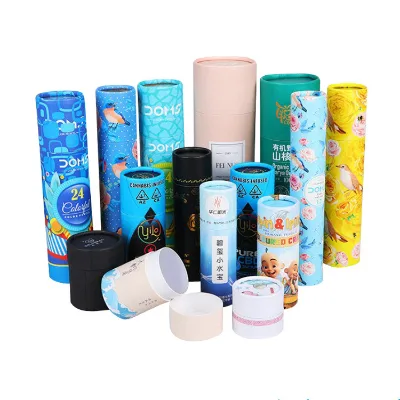
Find 30 listings for paperboard tube options suitable for packaging, electronics, and gift applications. Buyers can compare specifications, customization features, and supplier details to select the right cylindrical containers for their needs.
Key considerations
Products List




Comprehensive Sourcing Guide
Strategic Sourcing Guide for Paperboard Tube Procurement
The global market for paperboard tubes has expanded significantly, driven by the dual demands of industrial packaging efficiency and the rising consumer preference for sustainable alternatives to plastic. For procurement professionals, navigating this sector requires a granular understanding of material specifications, manufacturing capabilities, and the distinct regulatory landscapes that govern different end-uses. This guide synthesizes observed market data and technical parameters to provide a disciplined framework for sourcing paperboard tubes, ensuring that buyers can make informed decisions without relying on unverified claims or speculative market figures.
Technical Specifications and Material Composition
The foundation of any successful paperboard tube procurement strategy lies in the precise definition of technical specifications. Unlike generic cylindrical containers, paperboard tubes are engineered for specific load-bearing capacities, dimensional tolerances, and chemical resistances. The core material typically consists of kraft paper or white paperboard, selected based on the required rigidity and aesthetic finish. In the observed market data, the material composition is explicitly noted as "kraft paper or white paperboard," indicating a choice between high-strength brown fibers and a smoother, printable white surface.
Dimensional flexibility is a critical technical attribute. While some industrial applications require standard diameters, the procurement data highlights "custom size" as a prevalent specification, with observed ranges extending from small diameters suitable for jewelry to large-scale cylinders up to 1000mm in diameter. The wall thickness and density of the paperboard are not always explicitly stated in general listings but are implied through the "technics" of "PAPERBOARD" and the structural integrity required for applications ranging from food containers to industrial insulation.
Buyers must verify the specific paper grade used, as the tensile strength and burst resistance vary significantly between single-ply and multi-ply constructions. The observed "Single package size" of 28x7x2 cm suggests that even large tubes are often shipped in a compressed or bundled state to optimize logistics. Furthermore, the "Shape" is consistently cylindrical, but the internal geometry and end-closure mechanisms (such as caps or lids) are often custom-fabricated to fit the specific product being housed. When evaluating technical data, procurement teams should request detailed cross-section diagrams and material safety data sheets (MSDS) to confirm the chemical composition, particularly if the tube is intended for food contact or sensitive electronic components.
Compliance, Certification, and Regulatory Standards
Navigating the compliance landscape for paperboard tubes requires distinguishing between general quality management systems and specific product certifications. The market data indicates that ISO9001 is a high-confidence certification observed among suppliers, serving as a baseline indicator of a manufacturer's commitment to consistent quality management processes. However, for buyers in regulated industries such as food, cosmetics, or pharmaceuticals, ISO9001 alone is insufficient.
A critical area of verification is food safety compliance. The observed usage data includes "Food," "Drinks," and "Health Care Products," alongside specific features like "Steamable" containers. This implies that the paperboard must be treated or coated to withstand moisture and heat without leaching harmful substances. While the provided text mentions "FSC" as a low-confidence background fact, buyers should not assume FSC certification is present unless explicitly verified by the supplier. Instead, procurement teams must demand evidence of compliance with local food contact regulations, such as FDA approval in the United States or EU Regulation 10/2011 for plastics and paper-based materials in Europe.
For industrial applications, such as "Wire & Cable Protection" or "Transformer" insulation, the chemical and thermal properties become paramount. The observed "Thermal Rating" of F 155 and "Maximum Voltage" of 20KV~100KV suggest that certain paperboard tubes are engineered with specialized organic insulation properties. These are not standard packaging tubes but high-performance components. Buyers must verify that the "Chemistry" of the insulation, described as "Organic Insulation," meets the specific dielectric strength and thermal stability requirements of their application. Relying on general "Organic Insulating Material" classifications without specific test reports can lead to catastrophic failures in high-voltage environments.
Cost Drivers and Pricing Dynamics
Understanding the cost structure of paperboard tubes is essential for budgeting and negotiation. The observed price range of 0.01 to 20 USD reflects the extreme variability in the market, driven by factors such as size, wall thickness, customization level, and order volume. The lower end of the spectrum likely corresponds to small, standard-sized tubes with minimal processing, while the higher end encompasses large-diameter, custom-printed, or specialized insulation tubes.
Minimum Order Quantity (MOQ) is a primary cost driver. The data shows an observed MOQ range of 100 to 5000 units, with specific instances of 500 and 1000 pieces. Suppliers with higher MOQs often offer lower unit prices due to economies of scale in paper purchasing and machine setup. Conversely, suppliers accepting lower MOQs, such as 100 units, typically charge a premium to cover the inefficiencies of small-batch production. Buyers must balance the need for inventory flexibility against the cost benefits of bulk purchasing.
Customization is another significant variable. The "Customization" attribute is listed as "Available," and "Customized Printing" is noted as "Acceptable." This includes offset printing for branding, specific color matching, and custom die-cutting. Each layer of customization adds to the production time and cost. The "Surface Handling" method of "Offset Printing" requires specific setup costs and ink materials, which are factored into the final price. Additionally, the "Packing" method, whether "Pallet" for industrial bulk or "Paper Carton" for smaller shipments, impacts the overall landed cost. Buyers should request a detailed cost breakdown that separates material costs, tooling fees, printing charges, and packaging expenses to ensure transparency.
Typical Applications and Usage Scenarios
The versatility of paperboard tubes is evident in the diverse range of applications observed in the market. These range from consumer-facing retail packaging to heavy-duty industrial components. In the consumer sector, the tubes are utilized for "Jewelry," "Cosmetics," "Gifts," "Toys," and "Greeting Cards." The "Style" of "Leisure" and "New Chinese Style" indicates that aesthetic design plays a crucial role in these applications, where the tube serves as both a container and a marketing tool. The "Usage" data further expands to "Arts and Crafts," "Garment & Shoes," and "Electronic Products," highlighting the tube's adaptability as a structural element in various retail environments.
In the industrial sector, the applications are more technical and safety-critical. The "Application" field lists "Wire & Cable Protection," "Machine Protection," "Transformer," and "Motor." These uses require tubes with specific mechanical and electrical properties, such as the "Solid" type and "Organic Insulation" chemistry mentioned in the data. The "Usage" for "Food" and "Drinks" also appears, suggesting that paperboard tubes are increasingly replacing plastic in the food and beverage industry, particularly for items that require "Steamable" features.
The "Applicable Space" of "Kitchen" and "Tableware" usage further underscores the shift toward sustainable packaging in domestic and commercial settings. For procurement professionals, it is vital to categorize their requirements clearly. A tube suitable for "Cosmetics" may not possess the tensile strength required for "Transformer" insulation, and a tube designed for "Food" may not meet the dielectric standards for "Wire & Cable Protection." Misalignment between the application and the tube's technical specifications can lead to product damage, safety hazards, or regulatory non-compliance.
Supplier Evaluation and Operational Capabilities
Evaluating potential suppliers requires a multi-faceted approach that goes beyond price and lead time. The "Location" data points to "Tianjin, China" and "Hebei, China" as key manufacturing hubs, suggesting a concentration of supply chain capabilities in northern China. While this offers access to competitive pricing, buyers must also consider logistics, lead times, and communication efficiency. The observed "Delivery Time" of 15-18 days provides a benchmark for standard production cycles, but this can vary significantly based on order complexity and customization requirements.
Supplier capabilities should be assessed against the specific needs of the buyer. The "Brand" "Kangliyuan" and "2M" are observed in the data, but buyers should not rely on brand recognition alone. Instead, they should verify the supplier's production capacity, quality control processes, and ability to handle custom orders. The "Sample" policy, which offers free samples with the buyer covering shipping costs, is a standard practice that allows for physical verification of quality before committing to a large order. However, buyers should also inquire about the sample lead time and the specific parameters of the sample provided to ensure it matches the final production batch.
The "Payment Method" of "Ali Trade Assurance" indicates a level of transactional security, but buyers should also explore other payment terms that align with their financial policies. Supplier stability is another critical factor; a supplier with a long history of ISO9001 certification and a diverse product portfolio is generally more reliable than a new entrant. Buyers should request references from existing clients in similar industries to gauge the supplier's track record for on-time delivery and quality consistency.
Quality Control and Long-Term Procurement Strategy
Implementing a robust quality control (QC) protocol is essential for mitigating risks in paperboard tube procurement. The "Standard" for "diameter: 10-1000mm" and "customized" specifications necessitates rigorous dimensional checks. Buyers should establish clear acceptance criteria for diameter tolerance, wall thickness, and end-squareness. Visual inspections for printing defects, such as misalignment or color fading, are also critical, especially for consumer-facing products.
For industrial applications, functional testing is non-negotiable. This includes verifying the "Thermal Rating" and "Maximum Voltage" through third-party testing labs. The "Weight" of "<0.5 kg" for certain items suggests that lightweighting is a goal, but this must not compromise structural integrity. Buyers should implement a sampling plan, such as AQL (Acceptable Quality Limit) standards, to inspect incoming shipments.
Long-term procurement considerations involve building a strategic partnership with suppliers. The "Customization" and "Customized Printing" capabilities suggest that suppliers are willing to collaborate on product development. Buyers should engage suppliers early in the design phase to optimize tube dimensions and material usage, potentially reducing costs and improving sustainability. Additionally, considering the environmental impact, buyers should prioritize suppliers who demonstrate a commitment to sustainable sourcing, even if specific certifications like FSC are not explicitly confirmed in the initial data. Establishing a clear communication channel for feedback and continuous improvement will ensure that the supply chain remains agile and responsive to market changes.
Conclusion
Sourcing paperboard tubes effectively requires a balance of technical precision, regulatory diligence, and strategic supplier management. By focusing on verified specifications such as material composition, dimensional tolerances, and application-specific performance, buyers can avoid the pitfalls of unverified claims and market speculation. The diverse range of applications, from consumer packaging to high-voltage insulation, underscores the need for a tailored approach to procurement. Through rigorous quality control and a commitment to long-term supplier relationships, organizations can secure a reliable supply of paperboard tubes that meet their operational and sustainability goals.
FAQs
What materials are used for paperboard tubes?
The tubes are typically made from kraft paper or white paperboard. This choice allows buyers to select between high-strength brown fibers or a smoother, printable white surface depending on their specific packaging needs.
Can I order custom sizes for paperboard tubes?
Yes, custom sizes are available for these products. Specifications can range from small diameters suitable for jewelry to large industrial cylinders up to 1000mm in diameter to meet unique dimensional requirements.
What is the minimum order quantity for these tubes?
The minimum order quantity varies between 100 and 5000 units depending on the supplier. Specific listings show MOQs of 500 or 1000 pieces, with higher volumes often yielding better unit pricing.
How long is the delivery time for custom orders?
The standard delivery time is 15 to 18 days for production. This timeline applies to orders requiring customization such as offset printing or specific packaging configurations like paper cartons or pallets.
Which certifications do paperboard tube manufacturers hold?
High-confidence data indicates that ISO9001 certification is available among suppliers. This serves as a baseline for quality management, though buyers should verify specific food safety or industrial compliance standards separately.
What are the thermal ratings for industrial paperboard tubes?
Industrial grade tubes can have a thermal rating of F 155. These specialized products feature organic insulation chemistry and are designed for applications like wire protection or transformer insulation with high voltage capabilities.